

What vets wish you knew about dog behavior
KEY TAKEAWAYS
Dog body language meanings, therapy dog indicators, and training tips from Dr. Renee Mead and Canine Therapy Corps.
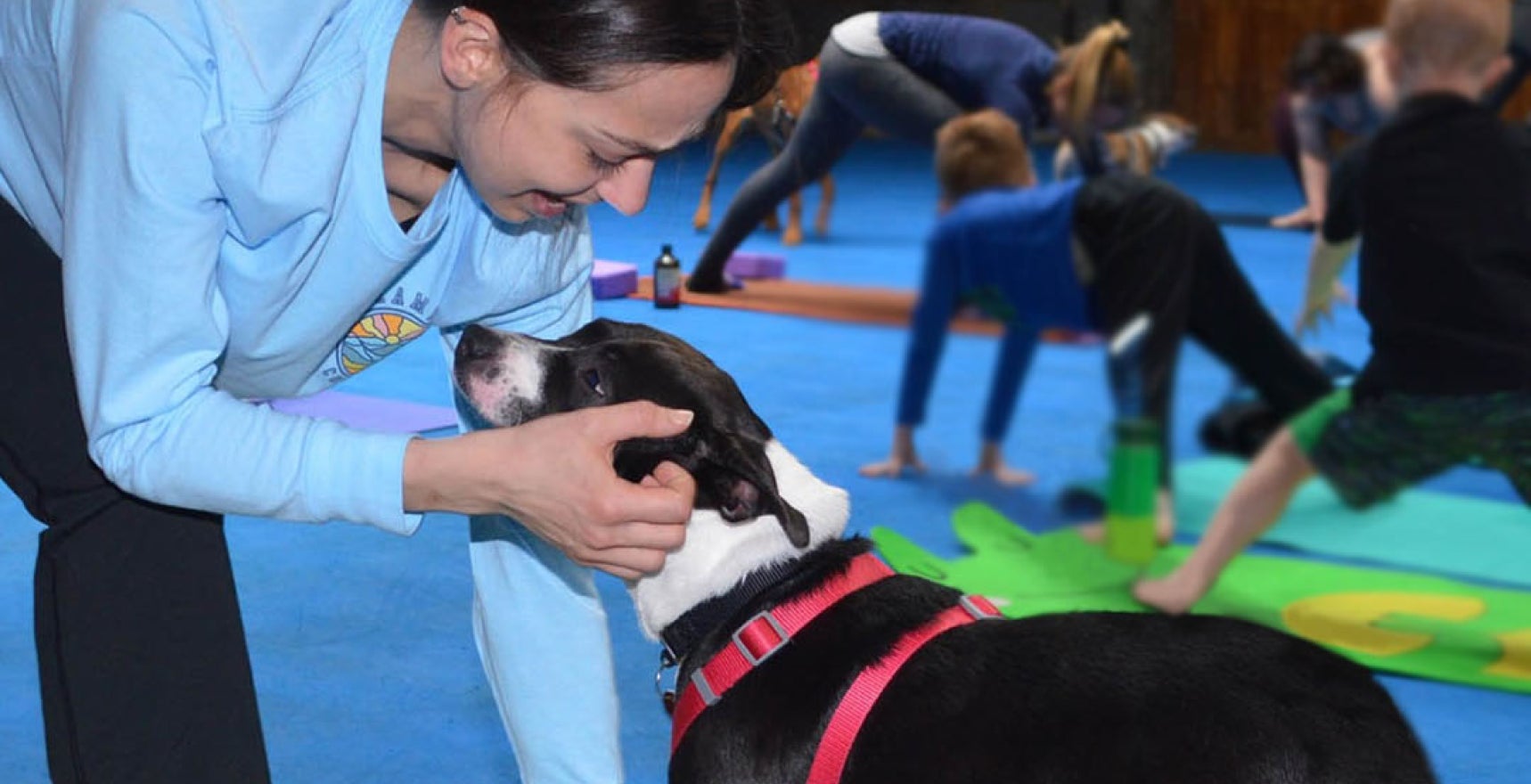
Ever wondered what your dog is really saying? Lovet veterinarian Dr. Renee Mead gave an exclusive webinar surrounding dog body language and behavior to current and prospective therapy dog handlers as part of our ongoing partnership with Canine Therapy Corps. Missed the webinar? You can still get the full scoop right here.
What your dog’s body language is really saying?
Most pet parents can identify when their dog is trying to communicate with them directly, whether that’s a paw on your leg before dinner or a happy bark to throw the ball again. But have you ever struggled to figure out what your dog was trying to say? Or been surprised by how your dog reacted to something?
In the same way that your body language tells your dog things about how you’re thinking and feeling, your dog’s body language can reveal important insights into their emotional state that can help you meet their needs in the moment.
Vets like Dr. Mead are trained to recognize even the smallest of these signs, but many aspects of dog body language are easily picked up by the average person. You just need to know what to look out for, which requires looking closely at some of their more subtle signs.
Signs of anxiety
Many signs of dog anxiety echo human signs of anxiety, such as shivering or whimpering. However, there are other more subtle signs of anxiety to look out for that can help you intervene more quickly and prevent your dog from undue stress.
Recognizing these signs can be tricky, Dr. Mead says, since many of them blend in with behaviors we commonly associate with our pups. Here are some of the signs that she says many pet parents are surprised to learn are signs of anxiety:
Yawning
That yawn might not mean that naptime is overdue! Especially in an active environment, frequent and consistent yawning is one of the first signs of stress in dogs.
Dogs use this type of yawning as nonverbal communication and as a calming method. A yawn from your dog may tell another dog that they’re not a threat, or that they’re stressed out.
You can take cues from this as well. When you spot frequent yawning from your dog, use it as a signal to give your dog a break.
Licking
A lick from your dog on the face can be a sign of affection, but a ‘kissy’ dog may also be an anxious one! Dogs lick one another for a variety of reasons, mainly to show submission or non-aggression.
Excessively slobbery greetings might be a sign of friendly excitement — or it could be that your dog is getting anxious about their social standing with a stranger.
Dogs may also lick their lips, paws, or elsewhere to self-soothe. This is because licking and other grooming behaviors produce calming hormones that relax your pup. In addition to being a sign of anxiety, over-grooming or licking can produce hot spots: painful, open sores that require immediate veterinary attention to avoid infection.
Panting
If it’s not hot and your dog is panting, that could be a sign of overexcitement caused by anxiety. Much like humans, when dogs feel anxious, their body temperature rises. Dogs can’t cool themselves by sweating like we can, so instead they release excess heat through the moist tissues of their mouth and tongue to prevent overheating.
Tail tucking and/or ears back
Just because your dog is excited doesn’t necessarily mean they’re anxious. But how can you tell the difference?
A helpful way to determine signs typically associated with excitement is to watch for body language like tail or ear placement. A dog with their ears back and tail tucked is more likely to be anxious than a dog just panting.
When fearful or anxious, dogs will try to protect their vulnerable spots and make themselves smaller by doing things like positioning their ears back, tucking their tail, or crouching or hunching. The more exaggerated this body language is, the more fearful or anxious they are — and the more space they need.
Moving or looking away
Like many animals, dogs can perceive prolonged eye contact and close proximity as a sign of aggression. If they’re avoiding your or someone else’s gaze or trying to move further away, they’re likely feeling overwhelmed.
If your dog is hiding in a corner or under furniture, it’s a clear sign they’re feeling anxious. However, they’re likely pretty distressed at that point. The goal is to recognize your dog’s cues before they reach the hidey-hole stage.
A good test is to give them a good pet for a few seconds, then stop. If your pup moves toward you, butts your hand, or otherwise asks for more, they’re probably feeling secure. If they’re looking away or moving away (or adding in other stressed body language like lip licking!), it might be time to give them a break.
Signs of pain
When it comes to pain, many of us humans associate pain with yelping or crying. This may be the case for immediate, acute pain, but chronic pain looks different.
“Dogs are very stoic creatures, and I have found as a veterinarian they are extremely stoic with chronic pain,” says Dr. Mead. On the flip side, sometimes limping or pain occurring at home will disappear in the clinic, especially with acute pain.
For these reasons, it’s usually a combination of observations from dog parents like you and a thorough nose-to-tail exam from a vet that helps connect a chronic pain diagnosis to symptoms like:
Slow to rise
If your dog takes a while to get up in the morning, they might be experiencing more than a “no bones” day. In addition to sore and stiff muscles or joints, chronic pain can cause changes in energy and enthusiasm.
Hesitating or sitting down on walks
In the same vein as being slow to rise, needing breaks or cutting a walk short is evidence your pup might be hiding pain. A stop to smell the roses, metaphorically or literally, is great — but make sure to tell your vet if your dog is making frequent stops or pauses on your usual route.
Limping
A consistent limp is an obvious sign that something’s wrong with your dog. However, Dr. Mead pointed out that an inconsistent limp — such as one that appears after extended resting and resolves later — might not just be standard stiffness.
Signs of comfort
It’s just as important to understand when your dog feels happy, safe, and comfortable as it is to understand when they’re anxious. We all want our dogs to be happy! It’s also an important indicator in determining if your dog is a strong candidate for therapy dog training.
Relaxed ears and tail
Floppy ears and a slow, gentle tail wag are a universal sign that your dog is feeling comfortable. If your dog’s ears don’t naturally flop, they should be free from any signs of tension.
To the same end: a faster wag, or a tail sticking straight up, might be a sign of anxiety rather than enthusiasm.
Showing belly
It’s not just asking for a tummy rub! Showing off their vulnerable spots is a sign of trust and comfort for dogs. However, make sure the rest of their body language is relaxed and happy.
Showing belly can be a sign of submission, and when paired with signs like tight ears or panting, it could be a sign that your pup is feeling anxious or threatened.
Happy face
You know your dog feels great when they’ve got their best smile on. For a lot of dogs, this looks like a cartoon grin: an open mouth, sometimes even with their tongue lolling out. Just be sure to make sure it truly is a happy face, and not anxious panting.
Loose and/or wiggly body language
In general, the best way to tell if your dog is comfortable is to check their overall body language. Are they loose and relaxed?
A little bit of a wiggle is also a good sign, which shows they’re so excited they can’t hold it in. Big wiggles, jumping, or zoomies might be too much excitement for therapy environments.
Why understanding dog behavior matters for evaluating therapy dog candidacy
Once you understand what your dog is really saying with their body language, you’ll have extra insight into how they’re thinking, feeling, or reacting to their surroundings. This, Dr. Mead says, is key to understanding if they’ll make a good therapy dog. (And that you’ll make a good therapy dog handler!)
“Reading your dog's signals — and knowing when they're truly comfortable — is an important foundation for therapy work,” she says.
Signs of a potential therapy dog
While many aspects of the therapy dog role can be taught to your dog, temperament plays an important part in their continued success in the certification process. When CTC and Dr. Mead are looking for potential candidates to recommend, they look for the following qualities:
Confidence
Confidence plays a big role in therapy dog work, especially in unpredictable environments. Do they confidently and calmly approach new objects, people, or animals? Or do they shrink away or get overly excited? A great therapy dog feels secure in themselves and in you, which helps them keep a level head.
Adaptability
Adaptability means both being unphased by changes in environment, people, or animals, and being able to apply existing skills to new situations. If your dog can reliably respond to cues such as “sit” or “come” outside the home or from new people, that might be an indicator they have what it takes to be a therapy dog.
Comfort around new people and environments
Therapy dogs are enthusiastic — not just working. If your dog genuinely enjoys meeting new people, exploring new environments, and does so politely, they are likely a good candidate for therapy dog training.
Signs your dog may prefer a quieter environment
Signs of anxiety as listed above such as licking, panting, or hiding are all indicators that your dog may not thrive as a therapy dog. Inconsistent behavior, such as reactivity inside or outside of the home, is also a sign to look out for. And if your dog is easily tired out by new places or things, they may benefit from life as a “civilian” dog.
The importance of checking in over time
If you choose to begin therapy dog training, it’s important to keep checking in with your dog, even after they complete certification. Your dog's comfort levels can change over time, depending on their age, health, or new stressors.
Watch for shifts in behavior, like slowing down, becoming less eager, or showing subtle stress signals. Give them a break, whether it’s a few minutes or a few weeks.
Always be willing to adjust workloads or settings if needed. Therapy work should always be a positive experience for the dog, not just the people they serve.
What doesn’t matter as much
Dr. Mead emphasized that behavior and enthusiasm are the most important factors in an initial assessment for therapy dogs. “Any breed, age, or size of dog can be a wonderful therapy dog,” she says.
However, you may want to factor in age when it comes to very young dogs, as they can be a bit too playful for therapy environments initially. In general, what matters most is that your pup enjoys participating in therapy work.
If your dog is already registered as an Emotional Support Animal (ESA), Dr. Mead mentioned that it’s not generally an indicator or a contraindicator. While an ESA dog can be very supportive to their person, it doesn’t necessarily mean they are calm and consistent in an exciting environment.
However, if you think your ESA dog might make a good candidate, she wouldn’t hesitate to investigate it. “It’s definitely a path you can move forward on,” she says.
How to reduce stress and increase trust in any environment
While specific training is required to become a therapy dog, reducing your dog’s stress and increasing their trust in you as their handler is at the core of that work — and owning a dog in general!
Dr. Mead recommends starting as early as you can, preferably when your dog is young. But old dogs can definitely learn new tricks, especially when using techniques like:
Positive reinforcement
Think about it: nobody likes being yelled at for what they did wrong. More than that, positive reinforcement gives your dog a clear behavior to repeat — instead of a behavior to avoid. Praise, food, or play are all great ways to positively reinforce.
Capture desirable behaviors
Many behaviors that we ask dogs to perform on command are ones they naturally do, like sitting or lying down. Throughout the day, when your dog offers the behavior you want, encourage them with a clicker or verbal word such as yes and give them a small treat. This is capturing the good behavior and reinforcing the likelihood they will repeat the behavior.
“By focusing on desirable behaviors your dog naturally does rather than correcting undesirable ones, you are building a stronger relationship without force or stress,” says Dr. Mead.
Use cues instead of commands
As you continue to train, consider introducing a hand signal as a cue to keep your dog focused, calm, and confident. A shouted word can be misinterpreted or misheard, whereas a hand gesture is clear and repeatable.
Cues are especially important in noisy and unpredictable environments, like hospitals or public spaces, which therapy dogs are often in.
Go slow and check in often
Dogs are quick learners, but too much too fast can add needless stress and frustration to your training. Dr. Mead recommends choosing one or two behaviors to focus on for one to two weeks before switching. Try to start with easy behaviors to help lay the foundation for more complicated ones. Start with easy behaviors and work up to more complicated ones.
No dog is perfect. (Even though they’re perfect to us!) The most active and well-trained therapy dogs can still have triggers. Learn to recognize what triggers your dog, and prepare with training so that you always have a plan.
Checking in with your dog, no matter where they are on your training journey, is critical whether they’re becoming a therapy dog or not. Stay aware of the environment, anticipate challenges when you can, and remember: you are your dog's biggest advocate.
Where to go to get therapy dog training
In Chicago, Dr. Mead recommends our friends at Canine Therapy Corps for resources and training to become a certified therapy dog. “CTC does the amazing work they do through training programs with their certified trainers and offers free therapy dog programs for our community,” she says.
If you’re not in the Chicago area, your local Lovet vet is also happy to provide personalized recommendations for training, whether you’re considering your dog as a candidate for therapy work or not. We can also help treat anxiety and other behavioral issues to make sure your dog is healthy and happy no matter the situation. Book an appointment with your local Lovet today!
DISCLAIMER: Not intended to be a substitute for professional veterinarian advice, diagnosis, or treatment. Always seek the advice of your veterinarian with any questions you may have regarding the medical condition of your pet. If you think your pet has a medical emergency, call or visit your veterinarian or your local veterinary emergency hospital immediately.
About Canine Therapy Corps
Canine Therapy Corps (CTC) is a Chicago-based 501(c)(3) organization with a mission to empower and motivate individuals to improve their physical and psychological well-being by harnessing the human animal bond. They offer goal-directed, interactive, animal-assisted therapy services free of charge using volunteers and certified therapy dogs. They seek to advance animal-assisted interventions through research and collaboration and train volunteers and their animals to work with people as part of the therapy process. They also offer training classes for dogs of all levels, whether or not they have aspirations of being a therapy animal. Learn more about Canine Therapy Corps.